
Abstract
Self-Help Groups (SHGs) have emerged as influential grassroots institutions in rural India, extending beyond microfinance to encompass social mobilisation and collective action. This study critically examines whether the duration of SHG participation influences women’s health-seeking behaviour in tribal villages of Maharashtra. Using a community-based cross-sectional design, data were collected from 320 SHG members, stratified into newly enrolled (≤ six months) and long-term (> five years) participants. Health-seeking behaviour was operationalised across four dimensions: choice of healthcare provider, autonomy in decision-making, financial burden, and perceived barriers to access. Findings reveal that socio-demographic disadvantage—low education, limited income sources, and restricted exposure to information—shapes the broader context of health behaviour. Enrolment in government health schemes was uniformly low (5.6%), with no significant difference between membership groups. Healthcare utilisation patterns showed reliance on government facilities (58.4%), with private and informal providers supplementing access. Structural barriers such as distance, transport, and financial constraints remained pervasive, while nearly four out of five respondents reported treatment-related financial strain. Autonomy in healthcare decision-making was limited, with most women requiring permission to seek care. The study demonstrates that prolonged SHG participation alone does not substantially improve healthcare utilisation, reduce financial burden, or enhance autonomy. The findings underscore the need for stronger institutional linkages, targeted health communication, and integration of SHGs with public health systems to translate collective participation into meaningful improvements in health outcomes.
1. Introduction
Self-Help Groups (SHGs) have become one of the most prominent grassroots strategies for women’s empowerment in rural India. Initially designed as microfinance collectives to promote savings and credit, SHGs have gradually evolved into multi-dimensional institutions that foster social mobilisation, peer learning, and collective action across domains such as livelihood, education, and health (Deininger & Liu, 2013; Gugerty et al., 2018; (Hazra et al., 2020). Their expansion reflects a broader recognition that empowerment is not merely financial but also social, cultural, and political, echoing (Sen, 1999) capability approach and (Kabeer, 1999) framework of resources, agency, and achievements. Within this framework, SHGs are increasingly positioned as platforms that can influence women’s health-seeking behaviour, particularly in contexts where structural barriers to healthcare access remain entrenched (Chakravarty & Jha, 2012) .
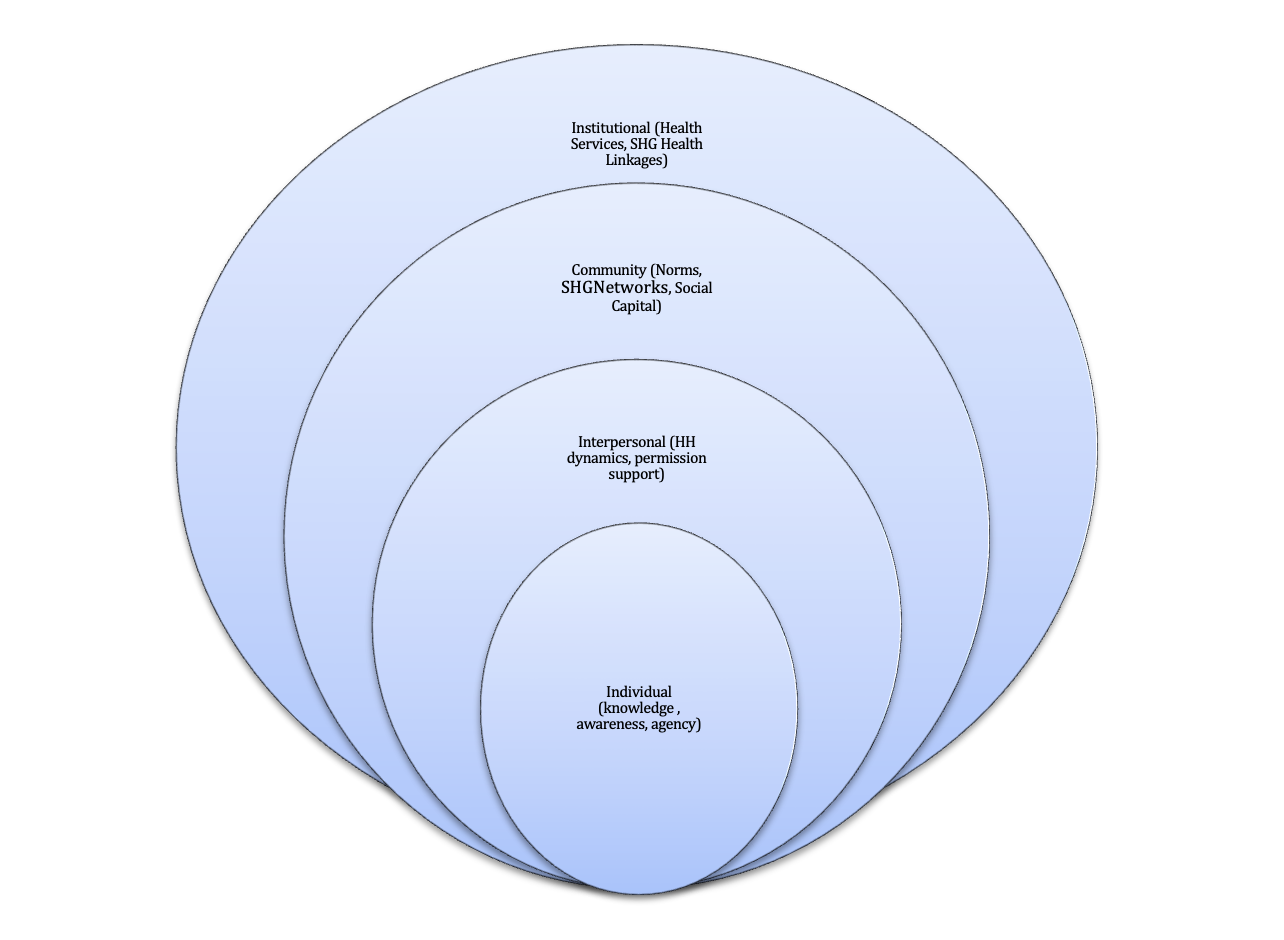
Health-seeking behaviour is a complex and multidimensional construct, shaped by individual agency, household dynamics, community norms, institutional structures, and policy environments (McLeroy et al., 1988; Ensor & Cooper, 2004). In rural and tribal settings, women’s ability to seek healthcare is constrained by a triad of barriers: geographic distance, financial cost, and socio-cultural norms that limit autonomy (Balarajan et al., 2011; Pradhan & De, 2025). These barriers are compounded by weak health infrastructure, shortage of personnel, and inadequate dissemination of public health information (Cáceres et al., 2023; Peters et al., 2008). As a result, women often delay care or rely on informal providers, perpetuating cycles of poor health outcomes (Grossmann et al., 2025).
Against this backdrop, SHGs are increasingly recognised as potential community-based platforms for strengthening women’s agency and improving healthcare utilisation. However, empirical evidence remains mixed. While some studies report positive associations between SHG participation and maternal healthcare utilisation (Saha et al., 2013; Hazra et al., 2020), others highlight that participation alone is insufficient without strong institutional linkages and health-specific programming. (Brody et al., 2017; (Raza et al., 2015). The present study contributes to this debate by examining whether the duration of SHG membership—a factor often overlooked—affects women’s healthcare decision-making, utilisation, and financial burden in tribal villages of rural Maharashtra. By situating the analysis within a socio-ecological and capability-based perspective, this study seeks to provide a nuanced understanding of how sustained participation interacts with systemic constraints to shape health-seeking behaviour.
1.1. Role of Self-Help Groups in Health
Self-Help Groups (SHGs) function as grassroots institutions that extend beyond financial collectives to become platforms for social mobilisation, peer learning, and collective efficacy. Through regular meetings, women exchange information, build solidarity, and develop confidence in decision-making processes, thereby strengthening their agency in both household and community contexts (Sanyal, 2009; Chakravarty & Jha, 2012). In the health domain, SHGs have the potential to disseminate health-related information and entitlements, facilitate collective negotiation with service providers, provide financial support through savings and credit, and create enabling environments for women to challenge restrictive gender norms (Das, 2020; Deininger & Liu, 2013).
Empirical evidence demonstrates that SHGs can enhance awareness of maternal and child health practices, increase uptake of institutional deliveries, and promote preventive behaviours such as immunisation. (Saha et al., 2013; Hazra et al., 2020). However, their effectiveness is contingent upon integration with public health systems. Without structured facilitation and institutional linkages, SHGs risk remaining limited to financial functions, with minimal impact on health outcomes (Gugerty et al., 2018; Raza et al., 2015). Thus, SHGs represent a promising but underutilised mechanism for improving women’s health-seeking behaviour, requiring stronger institutional support to realise their full potential.
1.2. Recent Literature on SHGs and Health-Seeking Behaviour
Over the past two decades, scholarship has increasingly examined SHGs as vehicles for health promotion in low-resource settings. Large-scale interventions in Bihar and Uttar Pradesh demonstrated that structured health communication delivered through SHGs significantly improved antenatal care utilisation, institutional deliveries, and newborn care practices (Hazra et al., 2020; Saggurti et al., 2018). Similarly, studies highlight that integrating SHGs with health outreach strengthens women’s collective efficacy and promotes positive health behaviours at scale (Saha et al., 2013; Cáceres et al., 2023).
Systematic reviews, however, caution against overgeneralisation. (Brody et al., 2017; Gugerty et al., 2018) emphasise that the magnitude of SHG impact varies depending on programme design, facilitation intensity, and contextual factors. (Deininger & Liu, 2013) further argue that access to credit and group participation do not automatically translate into improved health outcomes without supportive infrastructure. A parallel strand of literature situates SHGs within the broader framework of collective action and social capital theory, where group participation is expected to enhance women’s agency, information access, and bargaining power (Kabeer, 1999; Sen, 1999).
Recent scholarship also emphasises heterogeneity within SHG participation. Longer membership duration may strengthen financial capacity, expand social networks, and increase exposure to health-related information (Das, 2020; Prillaman, 2020). Yet, empirical evidence on this “duration effect” remains limited, particularly in tribal contexts where structural barriers persist (Grossmann et al., 2025; Pradhan & De, 2025). This study addresses this gap by comparing long-term and newly enrolled SHG members, thereby offering a nuanced understanding of how sustained engagement interacts with systemic constraints to shape health-seeking behaviour.
1.3. Operational Definition of Health-Seeking BehaviourFor the purposes of this study, health-seeking behaviour was operationalised across four dimensions:
-
Choice of healthcare provider – utilisation of public, private, or informal sources of care (Raza et al., 2015).
-
Women’s participation in healthcare decision-making – measured through the need for permission to seek care, reflecting intra-household dynamics and gendered norms (Nikiema et al., 2012).
-
Financial burden – treatment-related expenditure and coping mechanisms, including reliance on out-of-pocket payments and informal borrowing (Khatun & Ghosh, 2021; Balarajan et al., 2011).
-
Perceived barriers to healthcare access – including distance, transport, cost, and need for accompaniment, which reflect structural and socio-cultural constraints (Peters et al., 2008; Ensor & Cooper, 2004).
Together, these indicators capture both utilisation patterns and the socio-economic and cultural constraints shaping women’s access to healthcare. This operationalisation aligns with the socio-ecological model (McLeroy et al., 1988) and capability-based perspectives (Sen, 1999; Kabeer, 1999), situating health-seeking behaviour within broader structural and social contexts.
2. Objectives and Importance of the Study
The primary objective of this study is to critically examine whether the duration of Self-Help Group (SHG) participation influences women’s health-seeking behaviour in rural and tribal contexts of Maharashtra. Specifically, the study seeks to assess whether sustained engagement in SHGs enhances women’s autonomy in healthcare decision-making, improves utilisation of formal healthcare services, reduces treatment-related financial burden, and mitigates structural barriers such as distance, transport, and the need for accompaniment. By comparing long-term members (more than five years) with newly enrolled members (six months or less), the study aims to generate empirical evidence on the “duration effect” of SHG participation, a dimension often overlooked in existing scholarship (Deininger & Liu, 2013; Gugerty et al., 2018; Chakravarty & Jha, 2012). In doing so, the research intends to move beyond binary measures of membership and provide a nuanced understanding of how prolonged collective engagement interacts with systemic constraints to shape health outcomes. Furthermore, the study seeks to situate SHGs within the broader socio-ecological and capability-based frameworks (Sen, 1999; Kabeer, 1999; McLeroy et al., 1988), thereby contributing to theoretical debates on agency, empowerment, and health equity. Ultimately, the objective is not only to evaluate the effectiveness of SHGs as community-based platforms for health but also to highlight the importance of institutional linkages and supportive infrastructure in translating social participation into meaningful improvements in women’s health-seeking behaviour.
The importance of this study lies in its attempt to bridge a critical gap in the literature on women’s empowerment and health-seeking behaviour in rural India by examining the role of duration of SHG participation. While SHGs have been widely promoted as vehicles for social and economic empowerment, their potential to influence health outcomes remains underexplored, particularly in tribal contexts where structural barriers to healthcare access are deeply entrenched (Cáceres et al., 2023; Grossmann et al., 2025). By focusing on the comparative experiences of long-term and newly enrolled SHG members, this study provides valuable insights into whether sustained engagement in collective platforms translates into measurable improvements in healthcare utilisation, autonomy in decision-making, and reduction of financial burden (Saha et al., 2013; Hazra et al., 2020). The findings are significant because they highlight that participation alone may not be sufficient to overcome systemic challenges such as distance, cost, and socio-cultural constraints (Pradhan & De, 2025; Khatun & Ghosh, 2021), thereby underscoring the need for stronger institutional linkages between SHGs and public health systems. Moreover, the study contributes to theoretical debates on agency and capability by situating health-seeking behaviour within a socio-ecological framework (Ensor & Cooper, 2004; Peters et al., 2008), offering a nuanced understanding of how individual, household, community, and institutional factors interact to shape women’s access to healthcare. In practical terms, the research has policy relevance for designing integrated interventions that leverage SHGs not only as financial collectives but also as platforms for health communication, entitlement dissemination, and collective negotiation with service providers (Das, 2020; Raza et al., 2015). Ultimately, the importance of this study lies in its potential to inform strategies that strengthen community-based institutions as catalysts for health equity, thereby advancing both academic scholarship and public health practice in rural and tribal India.
3. Materials and Methods
This study employed a community-based cross-sectional design to investigate the relationship between the duration of SHG participation and women’s health-seeking behaviour in rural Maharashtra. The research was conducted between September 2018 and January 2019 in Shahapur Block of Thane district, which has a high concentration of SHGs. A multistage sampling procedure was adopted to ensure representativeness. First, Shahapur Block was purposively selected due to its large number of active SHGs. Within the block, five villages were randomly chosen, and from each village, ten SHGs were listed and randomly selected. Subsequently, four women members from each SHG were chosen through simple random sampling, resulting in a total sample size of 320 respondents. To capture the effect of membership duration, participants were categorised into two groups: newly enrolled members (≤ six months, n = 110) and long-term members (> five years, n = 210). This stratification allowed for comparative analysis of health-seeking behaviour across different levels of SHG engagement (Deininger & Liu, 2013; Gugerty et al., 2018).
Data were collected using a pre-tested semi-structured interview schedule, administered through face-to-face household interviews by trained field investigators. The questionnaire gathered information on socio-demographic characteristics, healthcare utilisation, choice of healthcare providers, enrolment in government health schemes, treatment-related financial burden, decision-making autonomy, and perceived barriers to healthcare access. Health-seeking behaviour was operationalised across four dimensions: (i) choice of healthcare provider (public, private, or informal), (ii) women’s participation in healthcare decision-making, (iii) financial burden associated with treatment expenditure, and (iv) perceived barriers such as distance, transport, cost, and need for accompaniment (Nikiema et al., 2012; Peters et al., 2008).
Data were analysed using SPSS version 20, with descriptive statistics used to summarise socio-demographic variables and chi-square tests applied to examine associations between SHG membership duration and selected indicators of health-seeking behaviour. Statistical significance was assessed at the 5% level (p < 0.05). Ethical approval was obtained from the Institutional Ethics Committee, and informed consent was secured from all participants, ensuring confidentiality and voluntary participation throughout the study (Ensor & Cooper, 2004; Balarajan et al., 2011).
4. Results
The results of this study provide a comprehensive overview of the socio-demographic profile of SHG women in rural Maharashtra and examine how membership duration influences their health-seeking behaviour. By analysing data from 320 respondents, the findings highlight patterns of healthcare utilisation, awareness and enrolment in government health schemes, structural barriers to access, financial burden, and women’s autonomy in decision-making. The results are presented thematically to capture both quantitative trends and contextual insights, thereby situating the lived realities of tribal women within broader socio-ecological and capability-based frameworks (McLeroy et al., 1988; Sen, 1999).
This section begins with an exploration of the socio-demographic characteristics of respondents, which establish the socio-economic and cultural context shaping health behaviour. It then examines awareness and enrolment in health schemes, followed by utilisation patterns and provider choice. Subsequent subsections analyse structural barriers such as distance, transport, and permission, as well as the financial burden associated with healthcare expenditure. Finally, the results address women’s agency in health decision-making, highlighting the persistence of intra-household constraints. Together, these findings provide a nuanced understanding of how SHG participation interacts with systemic challenges, offering critical insights into the limitations and potential of community-based platforms in influencing health outcomes (Gugerty et al., 2018; Kabeer, 1999).
4.1. 1. Socio-Demographic Characteristics
Table 1: Socio-demographic characteristics of the 320 tribal women who participated in the study
| Variable | Category | Frequency (n) | Percentage (%) |
|---|---|---|---|
| Age | 20–30 years | 92 | 28.8 |
| 31–40 years | 224 | 70.0 | |
| 41 years & above | 4 | 1.2 | |
| Education | Up to 8th | 221 | 69.0 |
| 8th & above | 76 | 23.8 | |
| Never attended school | 23 | 7.2 | |
| Religion | Hindu | 320 | 100.0 |
| Occupation | Agricultural labour/household work | 274 | 85.6 |
| Wage labour/other work | 42 | 13.1 | |
| Others | 4 | 1.3 | |
| Occupation of Husband | Cultivators/Agricultural labourers | 280 | 87.5 |
| Business/Services | 37 | 11.6 | |
| Not engaged in paid work | 3 | 0.9 | |
| Type of Family | Joint | 248 | 77.5 |
| Nuclear | 72 | 22.5 | |
| Caste | SC/ST | 182 | 56.9 |
| OBC | 138 | 43.1 | |
| No. of Earning Members in Family | One | 287 | 89.7 |
| More than one | 33 | 10.3 | |
| Exposure to Mass Media | Yes | 20 | 6.2 |
| No | 300 | 93.8 | |
| Duration of SHG Membership | < 6 months | 110 | 34.4 |
| > 5 years | 210 | 65.6 |
Note: Mean age of respondents = 33.3 years.
The study included 320 tribal women who were members of SHGs in rural Maharashtra, with a mean age of 33.3 years. The majority of respondents were between 31–40 years (70.0%), followed by younger women aged 20–30 years (28.8%), while only a small proportion were above 41 years (1.2%). Educational attainment was generally low, with nearly seven out of ten respondents (69.0%) having studied only up to the eighth standard, 23.8% reporting education beyond eighth grade, and 7.2% having never attended school. All respondents identified as Hindu, reflecting the religious homogeneity of the study villages. Occupationally, most women were engaged in agricultural labour or household work (85.6%), while a smaller proportion worked as wage labourers or in other forms of employment (13.1%). Only 1.3% reported occupations outside these categories.
Household characteristics further highlight socio-economic disadvantage. A large majority of husbands were cultivators or agricultural labourers (87.5%), with only 11.6% engaged in business or services. Most families were joint (77.5%), and nearly 90% had only one earning member, underscoring economic vulnerability. Caste distribution showed that 56.9% belonged to Scheduled Castes or Scheduled Tribes, while 43.1% were from Other Backward Classes. Exposure to mass media was extremely limited, with only 6.2% reporting any engagement, while 93.8% had no exposure, reflecting restricted access to information. With respect to SHG participation, 65.6% had been members for more than five years, while 34.4% were newly enrolled. These findings collectively illustrate the socio-economically disadvantaged background of respondents, characterised by low education, limited income sources, and restricted access to information, which form the broader context within which health-seeking behaviour is shaped (Balarajan et al., 2011).
4.2. Awareness and Enrolment in Health Schemes
Enrolment under government health schemes was uniformly low across both categories of SHG members. Only 5.6% of respondents (18 out of 320) reported being enrolled in any health scheme, while the overwhelming majority (94.4%) had no coverage. Among newly enrolled members, enrolment was 2.7%, compared to 7.1% among long-term members. Although the proportion was slightly higher among women with longer SHG participation, the difference was not statistically significant (χ², p = 1.000). These findings suggest that duration of SHG membership does not substantially influence awareness or uptake of government health schemes.
Table 2: Association between duration of SHG membership and enrolment under any health schemes
| Variable | Category | < 6 months (n = 110) | > 5 years (n = 210) | Total (%) | p-value |
|---|---|---|---|---|---|
| Enrolment under any health scheme | Yes | 3 (2.7%) | 15 (7.1%) | 5.6 | 1.000 |
| No | 107 (97.3%) | 195 (92.9%) | 94.4 |
The persistently low enrolment rates highlight structural and informational barriers that limit access to entitlements. Limited exposure to mass media, inadequate dissemination of scheme-related information, and weak institutional linkages between SHGs and the public health system appear to constrain women’s ability to benefit from available programmes. Similar challenges have been documented in other rural contexts, where weak outreach and lack of integration between community groups and health systems hinder uptake of entitlements (Saha et al., 2013; Saggurti et al., 2018). Even among long-term members, participation in SHGs did not translate into meaningful improvements in scheme enrolment, indicating that financial and informational vulnerabilities remain unaddressed. This underscores the need for stronger integration of SHGs with health system outreach and entitlement dissemination mechanisms, so that collective participation can be leveraged to improve access to formal health protection (Hazra et al., 2020).
4.3. Health Care Utilisation and Choice of Providers
Patterns of healthcare utilisation among SHG members revealed that government facilities were the most frequently accessed source of care, accounting for 58.4% of all reported visits. Private providers were the second most common choice (23.1%), followed by informal providers such as local healers, quacks, or home-based treatments (18.4%). When disaggregated by membership duration, utilisation patterns remained largely similar: 59.1% of newly enrolled members and 58.1% of long-term members reported using government facilities, while private providers were accessed by 21.8% and 23.8% respectively. Informal providers accounted for 19.1% among new members and 18.1% among long-term members.
Table 3: Health service utilisation among SHG women by duration of membership in rural Maharashtra (n = 320)
| Type of healthcare provider | < 6 months (n = 110) | > 5 years (n = 210) | Total (%) |
|---|---|---|---|
| Government health facility | 65 (59.1) | 122 (58.1) | 58.4 |
| Private health facility | 24 (21.8) | 50 (23.8) | 23.1 |
| Informal providers (quacks/home treatment) | 21 (19.1) | 38 (18.1) | 18.4 |
| Total | 110 (100.0) | 210 (100.0) | 100.0 |
These findings suggest that provider choice is influenced more by accessibility, affordability, and perceived quality of services than by the duration of SHG participation. This is consistent with prior studies in rural India, which highlight that women’s reliance on public facilities is often shaped by cost considerations, while private and informal providers are sought when accessibility or perceived quality of care is higher (Cáceres et al., 2023).
4.4. Structural Barriers to Healthcare Access
Structural barriers emerged as a significant constraint across both groups of SHG members. Respondents reported challenges related to obtaining permission to seek care, arranging finances, distance to health facilities, transport availability, and the need for accompaniment. Among newly enrolled members, 68.1% identified permission as a major barrier compared to 52.7% of long-term members, suggesting modest improvements in autonomy with prolonged participation. Financial constraints were reported by 73.8% of new members and 69.1% of long-term members, while distance to health facilities was cited as a barrier by 76.2% and 66.4% respectively. Transport-related difficulties were reported by 72.9% of new members compared to 58.2% of long-term members. The need for accompaniment remained high across both groups, with 64.3% of new members and 62.7% of long-term members reporting it as a major problem.
Table 4: Percentage of respondents reporting selected barriers to healthcare access as a major problem, by duration of SHG membership (%)
| Barrier | < 6 months (n = 110) | > 5 years (n = 210) | Total (%) |
|---|---|---|---|
| Permission to seek care | [52.7]% | [68.1]% | [0.014]% |
| Financial constraint (treatment cost) | [69.1]% | [73.8]% | [0.025]% |
| Need for accompaniment | [62.7]% | [64.3]% | [0.060]% |
| Distance to health facility | [66.4]% | [76.2]% | [0.026]% |
| Need for transport | [58.2]% | [72.9]% | [0.026]% |
Although some differences were statistically significant, they were modest and did not indicate substantial variation in access-related constraints. These findings align with broader literature that emphasises the persistence of structural barriers such as distance, cost, and mobility restrictions in shaping women’s healthcare utilisation in rural and tribal contexts (Brody et al., 2017). The results suggest that while SHG participation may slightly reduce certain barriers, systemic constraints remain largely unaddressed, limiting the potential of SHGs to independently transform health-seeking behaviour (Peters et al., 2008).
4.5. Financial Burden
Financial strain associated with healthcare expenditure was reported by a substantial majority of respondents (79.1% overall). Among newly enrolled members, 76.4% experienced financial strain, while 80.5% of long-term members reported similar difficulties. The difference between groups was not statistically significant (χ², p = 0.475), indicating that prolonged SHG participation did not substantially reduce treatment-related financial burden. These findings highlight the continued reliance on out-of-pocket expenditure, consistent with the very low enrolment in government health schemes observed in the study (5.6%).
Table 5: Financial burden of treatment by duration of SHG membership
| SHG Duration | Financial Strain (Yes) | No Strain | Total | p-value |
|---|---|---|---|---|
| < 6 months | 84 (76.4%) | 26 (23.6%) | 110 | 0.475 |
| > 5 years | 169 (80.5%) | 41 (19.5%) | 210 | |
| Total | 253 | 67 | 320 |
The persistence of financial strain underscores the limited role of SHGs in providing financial protection against healthcare costs. While SHGs may facilitate access to savings and credit, these mechanisms appear insufficient to offset the high costs of treatment, particularly in contexts where formal health insurance coverage is minimal. This is consistent with evidence from other rural settings, where women often rely on borrowing, selling assets, or reallocating household resources to meet healthcare needs (Khatun & Ghosh, 2021; Prillaman, 2020). The findings suggest that without stronger institutional linkages to health financing schemes, SHGs alone cannot substantially reduce the economic vulnerability associated with healthcare expenditure (Balarajan et al., 2011).
4.6. Women’s Agency in Health Decision-Making
Autonomy in healthcare decision-making remained constrained across both categories of SHG members. A substantial proportion of women reported needing permission before seeking healthcare, reflecting the persistence of intra-household power dynamics and gendered norms. Among newly enrolled members, 65.5% indicated that they required permission to access healthcare services, while 74.8% of long-term members reported similar constraints. Although the difference between the two groups was not statistically significant (χ², p = 0.097), the findings highlight that prolonged participation in SHGs does not necessarily translate into greater independence in health-related decision-making.
These results resonate with broader scholarship on gender and health in rural India, which consistently demonstrates that women’s agency is shaped not only by individual awareness but also by entrenched household hierarchies and socio-cultural expectations (Das, 2020). Even when SHGs provide spaces for peer learning and collective solidarity, the influence of patriarchal norms within households often continues to restrict women’s ability to act autonomously in healthcare contexts. This suggests that while SHGs may enhance social interaction and confidence, their impact on decision-making autonomy remains mediated by structural and cultural constraints (Kabeer, 1999; Sen, 1999).
5. Discussion
The findings of this study provide a nuanced understanding of the relationship between the duration of SHG participation and women’s health-seeking behaviour in rural Maharashtra. Despite the expectation that prolonged engagement in SHGs would strengthen women’s agency and improve healthcare utilisation, the results indicate that membership duration alone does not significantly alter patterns of healthcare access, financial burden, or autonomy in decision-making. This suggests that while SHGs may enhance social interaction and collective solidarity, their independent influence on health outcomes remains limited without stronger institutional and systemic support (Chakravarty & Jha, 2012; Das, 2020).
A key observation is the persistently low enrolment in government health schemes, with only 5.6% of respondents reporting coverage. This finding aligns with national evidence that highlights gaps in awareness and uptake of health entitlements among rural and tribal populations (Raza et al., 2015). Even among long-term SHG members, participation did not translate into meaningful improvements in scheme enrolment, underscoring the need for targeted health communication and stronger linkages between SHGs and public health systems (Saggurti et al., 2018).
Healthcare utilisation patterns further reinforce the role of accessibility and affordability as primary determinants of provider choice. The reliance on government facilities, followed by private and informal providers, reflects broader trends in rural India where cost considerations and service availability shape utilisation (Grossmann et al., 2025). The continued use of informal providers highlights gaps in perceived quality and accessibility of formal services, consistent with evidence from tribal contexts where distance and transport remain critical barriers. Structural barriers such as financial constraints, distance, and mobility restrictions were widely reported across both groups, with only modest differences between long-term and newly enrolled members. These findings resonate with the socio-ecological perspective, which emphasises that individual agency is mediated by household, community, and institutional contexts (McLeroy et al., 1988; Ensor & Cooper, 2004). While SHGs may provide spaces for peer learning and collective mobilisation, systemic constraints such as inadequate infrastructure and entrenched gender norms continue to limit their effectiveness in transforming health-seeking behaviour (Deininger & Liu, 2013; Gugerty et al., 2018).
Financial burden emerged as another critical dimension, with nearly four out of five respondents reporting treatment-related strain. This reflects the broader challenge of out-of-pocket expenditure in India, which disproportionately affects rural and low-income households (Balarajan et al., 2011; Peters et al., 2008). Although SHGs facilitate savings and credit, these mechanisms appear insufficient to offset healthcare costs in the absence of formal financial protection. This finding underscores the importance of integrating SHGs with health financing schemes to reduce economic vulnerability and enhance access to care (Khatun & Ghosh, 2021).
Finally, autonomy in healthcare decision-making remained constrained, with a majority of women requiring permission before seeking care. This highlights the persistence of intra-household power dynamics and gendered norms, which continue to restrict women’s agency despite prolonged SHG participation. Similar findings have been reported in other studies, which note that empowerment through collective platforms often faces limitations when confronted with entrenched patriarchal structures (Brody et al., 2017; Sanyal, 2009).
Taken together, these findings suggest that SHGs have potential as community-based platforms for promoting health, but their effectiveness is contingent upon integration with public health initiatives and supportive infrastructure. Duration of participation alone is insufficient to overcome systemic barriers; rather, structured facilitation, health-specific programming, and institutional linkages are necessary to translate social participation into meaningful improvements in health-seeking behaviour. This study therefore contributes to the literature by demonstrating that empowerment through SHGs must be understood within a broader socio-ecological framework, where individual agency interacts with household, community, and institutional constraints (Sen, 1999).
6. Conclusion
This study set out to examine whether the duration of Self-Help Group (SHG) participation influences women’s health-seeking behaviour in rural and tribal Maharashtra. The findings demonstrate that longer membership does not necessarily translate into substantial improvements in healthcare utilisation, financial protection, or autonomy in decision-making. While SHGs provide important spaces for social interaction, peer learning, and collective solidarity, their independent impact on health outcomes remains limited when systemic barriers such as distance, transport, cost, and entrenched gender norms persist. The persistently low enrolment in government health schemes and the continued reliance on out-of-pocket expenditure highlight the inadequacy of financial protection mechanisms, even among long-term SHG members. Similarly, the reliance on informal providers underscores gaps in accessibility and perceived quality of formal health services.
Taken together, these results suggest that SHGs have potential as community-based platforms for promoting health awareness and collective mobilisation, but their effectiveness depends on stronger integration with public health systems, targeted health communication, and institutional linkages to financing schemes. Duration of participation alone is insufficient to overcome structural and cultural constraints; rather, SHGs must be embedded within broader socio-ecological strategies that address systemic inequities in healthcare access. By situating SHGs within this framework, the study contributes to both academic scholarship and policy discourse, underscoring the need for interventions that leverage community-based institutions not only for financial empowerment but also as catalysts for health equity. Ultimately, strengthening the interface between SHGs and public health initiatives offers a pathway to enhance women’s agency, reduce financial vulnerability, and improve health outcomes in rural and tribal India.
Conflict of Interest
The authors declare no competing financial or personal interests. Acknowledging that the corresponding author, Dr. Sucharita Pujari, is an active member of the Editorial Board of the Bharat Journal of Integrated Knowledge Systems, she was completely blinded and entirely recused from the peer-review, editorial evaluation, and decision-making pipeline for this manuscript to maintain the highest standard of academic integrity.
Funding Statement
This research was financially supported by the National Institute of Rural Development and Panchayati Raj (NIRDPR), India. The funding institution had no institutional role in the formulation of the study design, data collection, statistical analysis, interpretation of data, or the drafting and final approval of the manuscript.
Acknowledgement
Acknowledgements The authors express their sincere gratitude to the dedicated field investigators for their meticulous data collection efforts. Most importantly, we are deeply thankful to all the respondents and women Self-Help Group (SHG) members across the tribal villages of Shahapur Block, Thane district, Maharashtra, who generously shared their time, insights, and personal experiences for this study.
Authors’ Contribution
SP (Dr. Sucharita Pujari): As the sole author, she was entirely responsible for the conceptualization of the research study, methodology design, field investigation, data collection, statistical analysis, data interpretation, as well as the writing, critical refinement, and final preparation of the manuscript for submission. The author has read and approved the final version of the manuscript.
AI Declaration
The author declares that an advanced AI tool was utilized strictly as an interactive collaborative writing assistant to optimize the narrative flow, refine the academic prose, eliminate redundant phrasing, and assist in structural formatting according to high-impact journal standards. The conceptual design, critical synthesis, evaluation of empirical anomalies, and final interpretation of the literature were entirely executed and verified by the author, who remains fully accountable for the integrity and originality of the content.
References
Balarajan, Y., Selvaraj, S., & Subramanian, S. V. (2011). Health care and equity in India. The Lancet, 377(9764), 505–515. https://doi.org/10.1016/S0140-6736(10)61894-6
Brody, C., de Hoop, T., Vojtkova, M., Warnock, R., Dunbar, M., Murthy, P., & Dworkin, S. L. (2017). Economic self-help group programs for improving women’s empowerment: A systematic review. World Development, 95, 95–115. https://doi.org/10.1016/j.worlddev.2017.02.017
Cáceres, Á. L., Ramesh, R. M., Newmai, P., Kikon, R., & Deckert, A. (2023). Perceptions, health seeking behavior and utilization of maternal and newborn health services among an indigenous tribal community in Northeast India: A community-based mixed methods study. Frontiers in Public Health, 11, 1139334. https://doi.org/10.3389/fpubh.2023.1139334
Chakravarty, S., & Jha, A. N. (2012). Health care and women’s empowerment: The role of self-help groups. Health, Culture and Society, 2(1), 115–128. https://doi.org/10.5195/hcs.2012.56
Das, R. (2020). Self-help groups (SHGs) and women empowerment: A study in Cooch Behar district of West Bengal, India. International Journal of Inclusive Development, 6(1). https://doi.org/10.30954/2454-4132.1.2020.1
Deininger, K., & Liu, Y. (2013). Economic and social impacts of an innovative self-help group model in India. World Development, 43, 149–163. https://doi.org/10.1016/j.worlddev.2012.09.019
Ensor, T., & Cooper, S. (2004). Overcoming barriers to health service access: Influencing the demand side. Health Policy and Planning, 19(2), 69–79. https://doi.org/10.1093/heapol/czh009
Grossmann, D., Srivastava, S., Winkler, V., Brenner, S., Gupta, K. J., Paliwal, A., et al. (2025). Determinants of outpatient healthcare-seeking behaviors among the rural poor affected by chronic conditions in India: A population-based cross-sectional study in seven states. Global Health Action, 18(1), 2480413. https://doi.org/10.1080/16549716.2025.2480413
Gugerty, M. K., Biscaye, P. E., & Anderson, C. L. (2018). Delivering development? Evidence on self-help groups as development intermediaries in South Asia and Africa. Development Policy Review, 37(1), 129–151. https://doi.org/10.1111/dpr.12381
Hazra, A., Atmavilas, Y., Hay, K., & Saggurti, N. (2020). Effects of health behaviour change intervention through women’s self-help groups on maternal and newborn health practices. BMJ Global Health, 5(3), e002520. https://doi.org/10.1136/bmjgh-2020-002520
Kabeer, N. (1999). Resources, agency, achievements: Reflections on the measurement of women’s empowerment. Development and Change, 30(3), 435–464. https://doi.org/10.1111/1467-7660.00125
Khatun, Y., & Ghosh, S. (2021). Barriers of financial access to utilisation of health care services to women in rural areas of West Bengal, India: An analysis of a sample survey. Journal of Global Resources, 7(1), 110–116. https://doi.org/10.46587/jgr.2021.v07i01.013
McLeroy, K. R., Bibeau, D., Steckler, A., & Glanz, K. (1988). An ecological perspective on health promotion programs. Health Education Quarterly, 15(4), 351–377. https://doi.org/10.1177/109019818801500401
Nikiema, B., Haddad, S., & Potvin, L. (2012). Measuring women’s perceived ability to overcome barriers to healthcare seeking in Burkina Faso. BMC Public Health, 12, 147. https://doi.org/10.1186/1471-2458-12-147
Peters, D. H., Garg, A., Bloom, G., Walker, D. G., Brieger, W. R., & Rahman, M. H. (2008). Poverty and access to health care in developing countries. Annals of the New York Academy of Sciences, 1136(1), 161–171. https://doi.org/10.1196/annals.1425.011
Pradhan, M. R., & De, P. (2025). Women’s healthcare access: Assessing the household, logistic and facility-level barriers in India. BMC Health Services Research, 25(1), 323. https://doi.org/10.1186/s12913-025-12463-9
Prillaman, S. A. (2020). Strength in numbers: How women’s groups close India’s political gender gap. American Political Science Review, 114(2), 662–679. https://doi.org/10.1017/S0003055420000092
Raza, W. A., van de Poel, E., Panda, P., & Dror, D. (2015). Healthcare seeking behaviour among self-help group households in rural India. BMC Health Services Research, 15, 1254. https://doi.org/10.1186/s12913-015-1254-0
Saggurti, N., Atmavilas, Y., Porwal, A., & Das, R. (2018). Scale-up of women’s groups for improved maternal and newborn health: Evidence from India. BMJ Global Health, 3(Suppl 3), e001134. https://doi.org/10.1136/bmjgh-2018-001134
Saha, S., Annear, P. L., & Pathak, S. (2013). The effect of self-help groups on access to maternal health services: Evidence from rural India. International Journal for Equity in Health, 12, 36. https://doi.org/10.1186/1475-9276-12-36
Sanyal, P. (2009). From credit to collective action: The role of microfinance in promoting women’s social capital and normative influence. American Sociological Review, 74(4), 529–550. https://doi.org/10.1177/000312240907400402
Sen, A. (1999). Development as freedom. Oxford University Press.
Pujari, S., (2026). Association Between Duration of Self-Help Group Participation and Women’s Health-Seeking Behaviour: A Cross-Sectional Study in Rural India,. Bharat Journal of Integrated Knowledge Systems, 1(2), 20–30, https://doi.org/10.67511/bjiks.v1i2.1203
© 2026 The Author(s). Published by Refined-Research & Analytical Support Associated Private Limited. This is a gold open access publication under the terms of the CC BY 4.0 license.