

Abstract
In this research, an empirically testable conceptual framework is presented that will address how and under what conditions the connecting corridors in North East India (NER) and South East Asia will manifest in terms of trade integration and inclusive development. Following a deductive approach to logical inquiry, the paper combines theories on the gravity model of trade, new economic geography, transaction-cost institutional theory, regional competitiveness, and regional economic resilience to develop an integrated and testable framework along with propositions. The conceptual framework developed in this research proposes corridor connectivity (physical, institutional, and digital), reduction of transaction costs, regional competitiveness, and regional economic resilience in sequential order as mediators, while trade integration and inclusive development as outcomes, with border governance and financial inclusion acting as moderators. By doing this, the paper applies gravity and new economic geography theories to a subnational, landlocked, post-frontier context, where the border itself is seen as a variable instead of an exogenous factor, thus redefining peripherality as a moderation effect. This gives policymakers an analytical approach, wherein connectivity infrastructure generates development effects only if trade facilitation, finance, and good border governance accompany it, and also defines the NER as a moderated interface rather than a margin.
1. Introduction
The region of North East India was long viewed through a discourse of distance; that of being landlocked, endowed with natural resources but poor in economic wealth, linked with the rest of the country through a fragile piece of land bridge and with its neighbors through security-oriented borders. This depiction of the region cannot hold ground anymore. While the foreign and development policies of the Indian state have moved away from the “Look East” policy approach to “Act East,” the region has been positioned as a potential gateway linking South Asia with South East Asia, with the construction of a series of huge infrastructure projects, like the India–Myanmar–Thailand Trilateral Highway, the Kaladan Multimodal Transit Transport Project, inland waterways along the Brahmaputra and Barak, and other regional Bangladesh–Bhutan–India–Nepal connectivity initiatives (Patgiri & Borah Hazarika, 2023).
However, what seems even more puzzling about this is that despite large amounts spent on connectivity infrastructure and regional institutional structures such as the Bay of Bengal Initiative for Multi-Sectoral Technical and Economic Cooperation (BIMSTEC) being the most well-known one, the actual trade integration between the NER and South East Asia has been limited, and developmental progress within the region has been uneven (Asian Development Bank, 2022). Trade within the sub-region of Bay of Bengal is considered to be far below its potential because of transaction costs and non-tariff barriers and not tariffs only, which is considered to be a puzzle that is addressed by this paper.
This raises the issue that the research problem does not lie in the importance of corridors, but rather in how such connectivity through corridor systems is realized—or fails to be realized—in practice through particular mechanisms and in certain contexts into trade integration and inclusive growth. There are basically two ways in which current scholarship tends to handle these issues. On the one hand, policy literature documents various initiatives and ambitions without really explaining an explanatory mechanism that could be falsified. Trade and spatial theory, on the other hand, provides excellent mechanisms—such as the gravity model, new economic geography, and transaction-cost institutionalism—that have been developed for nation-states or industrialized regions, not interfaces.
This gap in knowledge is significant as public funding for connectivity in the region has ceased to be theoretical but has become actualized with hundreds of crores of rupees invested in the inland water transport project within the Kaladan multi-modal connectivity initiative, while dedicated projects of waterways development have been approved on Brahmaputra and Barak, and investment summits have been held attempting to draw private and foreign capital into the region’s manufacturing, energy and logistics infrastructure (Patgiri & Borah Hazarika, 2023). In case when such an investment is based on a developmental claim which has yet not been confirmed by any evidence, the lack of causal mechanism is not only the problem of academia but the problem of governance. Thus, the knowledge of circumstances under which connectivity pays off and when fails to yield results is of practical as well as academic importance.
The present paper attempts to bridge this gap using deductive reasoning. The main aim of the current work is to formulate a theoretically grounded conceptual framework, which will (a) identify the corridor connectivity as a multidimensional independent variable, (b) define the constructs that act as mediators in the effect exerted by corridor connectivity, (c) hypothesize the factors that affect the moderating effect of connectivity, and (d) develop a series of formally and empirically testable propositions. It responds to the call by the thematic track, asking not only “What is happening?” but “Why does it matter, for whom, and with what implications?” The rest of the paper is organized as follows. Section 2 summarizes the literature and highlights the research contribution. Section 3 discusses the theoretical underpinnings and the conceptual framework. Section 4 lays down the propositions. Section 5 discusses the conceptual methodology. Sections 6 and 7 elaborate the analytical logic of each path. Sections 8 and 9 outline the theoretical and policy implications, respectively.
2. Literature Review and Research Positioning
2.1. Corridors, connectivity, and the trade-integration literature
The bedrock of any research on distance-based trade relations lies in the gravity model, which postulates that bilateral trade increases with the size of trading partners while declining with respect to the distance between them, as well as other frictions like border costs (Tinbergen, 1962). The more recent version of the gravity model in line with the theory makes it evident that it is the relative distance, or the multilateral resistance term, which matters rather than distance in its absolute sense, and that there are trade costs imposed by borders, which greatly exceed the costs of tariffs alone (Anderson & van Wincoop, 2003). This finding is crucial for the case of a landlocked area such as the NER.
While gravity theory addresses the issue of trade volumes, NEG addresses its spatial structure. The core–periphery model proposed by Krugman (1991), which highlighted the interplay of increasing returns, transport costs, and factor mobility leading to concentration of economic activity, created self-reinforced cores and peripheral regions; and in the later synthesis it was shown that while reducing transport costs benefits cores, it does not necessarily help peripheries and sometimes leads to greater agglomeration in existing cores (Fujita et al., 1999). It is a humbling reality check for corridor optimism: a road may connect a peripheral region to a bigger market, but whether that region realizes any gains from such a connection or just serves as an intermediate stopover remains an open question. The same lesson comes through loud and clear in the literature on South Asian corridor development.
Firm-level trade theory adds a third layer. Models of firm heterogeneity show that only sufficiently productive firms self-select into exporting, so that the gains from lower trade costs are mediated by the productivity distribution of local firms (Melitz, 2003), while Ricardian models of technology and geography link comparative advantage to technological capability and the cost of distance (Eaton & Kortum, 2002). Together these strands imply that connectivity operates on trade through a chain of mediators—costs, firm capability, and competitiveness—rather than directly.
2.2. The North East interface: an empirical backdrop
In light of the particular case of the relationship between the NER and South East Asia, the broad theory gains sharper contours. The exemplary overland project, the India-Myanmar-Thailand Trilateral Highway, has suffered from multiple delays, and its eastward potential has been contingent upon the situation in Myanmar without which overland connectivity remains out of reach. On the institutional side, the story looks equally discouraging. More than two decades after the signing of the BIMSTEC Free Trade Area Framework Agreement, there is still no actual operational free trade area, and negotiations on goods, services, and investments continue to be bogged down with process-related issues, while regional trade continues to be said to be far below its potential (Asian Development Bank, 2022). There is consensus among researchers on the sub-region on what the problem is: not tariffs, but high trade transaction costs and many non-tariff barriers, and thus only improvements in infrastructure and connectivity leading to lower transportation and clearance costs will make the difference.
On the other hand, the border economies of NER illustrate the two-faced nature of the framework. While there exist land customs stations, informal trade is a large component of the same borders, in such a way that the border serves both as a barrier and passage based on how well it is governed. Complementarities in the exports and imports of neighbouring countries point towards possible gains through a dynamic cross-border value chain, but such possibilities have not been realized because the institutional dimensions of connectivity have fallen behind the physical dimensions. Such an empirical context is what leads us to develop a model that recognizes connectivity as multi-dimensional and the border as a governed variable.
2.3. Competitiveness, resilience, and inclusion as regional constructs
More than trade, there is the issue of whether integration brings benefits to regional well-being. Competitive Advantage of Nations, the famous book by Porter (1990), explains the source of prosperity in terms of efficiency, clustering, and the quality of the local business environment, not only in terms of the endowment of factors of production – which means that a corridor is valuable for development if it develops local efficiency. This issue is also addressed by the literature on regional economic resilience, that explores the dynamics of regional economies in response to shocks in their environments, including the capability to resist, adapt, and reorient themselves, with resilience being now understood as an evolutionary and path-dependent process dependent on industrial and institutional context (Martin & Sunley, 2015; Boschma, 2015).
Last, the inclusion dimension is covered by the literature on financial inclusion, which understands inclusion in multiple dimensions—accessibility, availability, and use of financial services—and establishes its empirical association with development (Sarma, 2008; Sarma & Pais, 2011; Demirgüç-Kunt et al., 2022). From the corridor perspective, financial inclusion is the pathway for border trade and enterprise, and digital business, not being left only to large intermediaries, but it is likely the condition that will define whether connectivity leads to inclusive or enclave development.
2.4. The border as institution
Beneath everything discussed above lies the institutional context, more specifically the border. According to the theories of transaction-cost economics and institutionalism, the transaction cost of exchanges—and thereby the amount of trading activity—is determined by the rules of the game under which the transactions take place (Williamson, 1985; North, 1990). The framework of the thematic track itself, the idea that borders “serve simultaneously as both barriers and connectors,” is an institutional statement par excellence, because the same line on a map will be either costly or inexpensive according to how it is regulated.
2.5. The gap and the positioning
Three gaps exist. Firstly, there is a contextual gap. The major theories of trade and geography have been developed in reference to the nation-state and more developed contexts, and have hardly been applied to sub-national and landlocked post-frontier interfaces like the NER. Secondly, there is a theoretical gap. Policy and academic literature has approached connectivity as a direct determinant of development, but the mechanisms through which this takes place—the cost savings, competitiveness, and resilience—and the factors that moderate this effect—the border governance, financial inclusion—have been left unspecified and unexplored. Finally, there is an integrative gap. The constructs required have been scattered in different literatures and have not yet been synthesized into one testable framework.
3. Theoretical Foundations and Conceptual Framework
The framework rests on a deliberate layering of theory. Gravity theory is used to formulate the initial expectation that reduction in distance and border frictions will increase trade. But this is modified by new economic geography, which makes the distribution result conditional on local factors. Transaction cost institutional theory provides the explanation: connectivity is important in that it reduces the transaction cost of exchange. Competitiveness and resilience theory converts this trade into long-term regional wellbeing, while inclusion theory decides the extent of distribution of this wellbeing. This results in a model consisting of one antecedent, three successive mediators, two outcomes, and two moderators.
Antecedent: Connectivity of Corridors. Connectivity is posited as a three-dimensional concept. Physical connectivity consists of highways, waterways, railway networks, and logistics. Institutional connectivity includes trade agreements, customs coordination, rule of origin, and the cooperation mechanisms of BIMSTEC and the Act East policy. Digital connectivity entails cross-border payment mechanisms, ecommerce platforms, and information exchange. A three-dimensional approach to connectivity is crucial because the literature on corridors reveals that physical connectivity alone generates poor results (De & Iyengar, 2014).
Mediating Variables: There are three variables, sequentially mediating the impact of connectivity on integration and economic resilience, and these are transaction cost reduction (M1), regional competitiveness (M2), and regional economic resilience (M3). M1 is the proximate mediating variable through which cheaper transactions are brought about by connectivity as per the predictions made in the gravity equation and the trade facilitation policy agenda in BIMSTEC (Anderson & van Wincoop, 2003; Asian Development Bank, 2022). M2 entails the capability to take advantage of cheaper transactions for productivity gains and participation in value chains (Porter, 1990).
Outcomes: This model separates trade integration outcomes (depth of the trade between NER and South East Asia, and value chain integration) from inclusive development outcomes (economic gains). It does this to avoid the usual confusion of trade volume for welfare and to make it possible to ask, ‘For Whom?’
Moderators: Two constructs condition the strength of the paths. Border governance (W1) captures the barrier–connector duality: cooperative, low-friction border management strengthens the connectivity–integration path, while securitized or contested borders weaken it (North, 1990). Financial inclusion (W2) conditions whether connectivity’s competitiveness gains reach small enterprises and border communities, and therefore whether development is inclusive or enclave-like (Sarma & Pais, 2011).
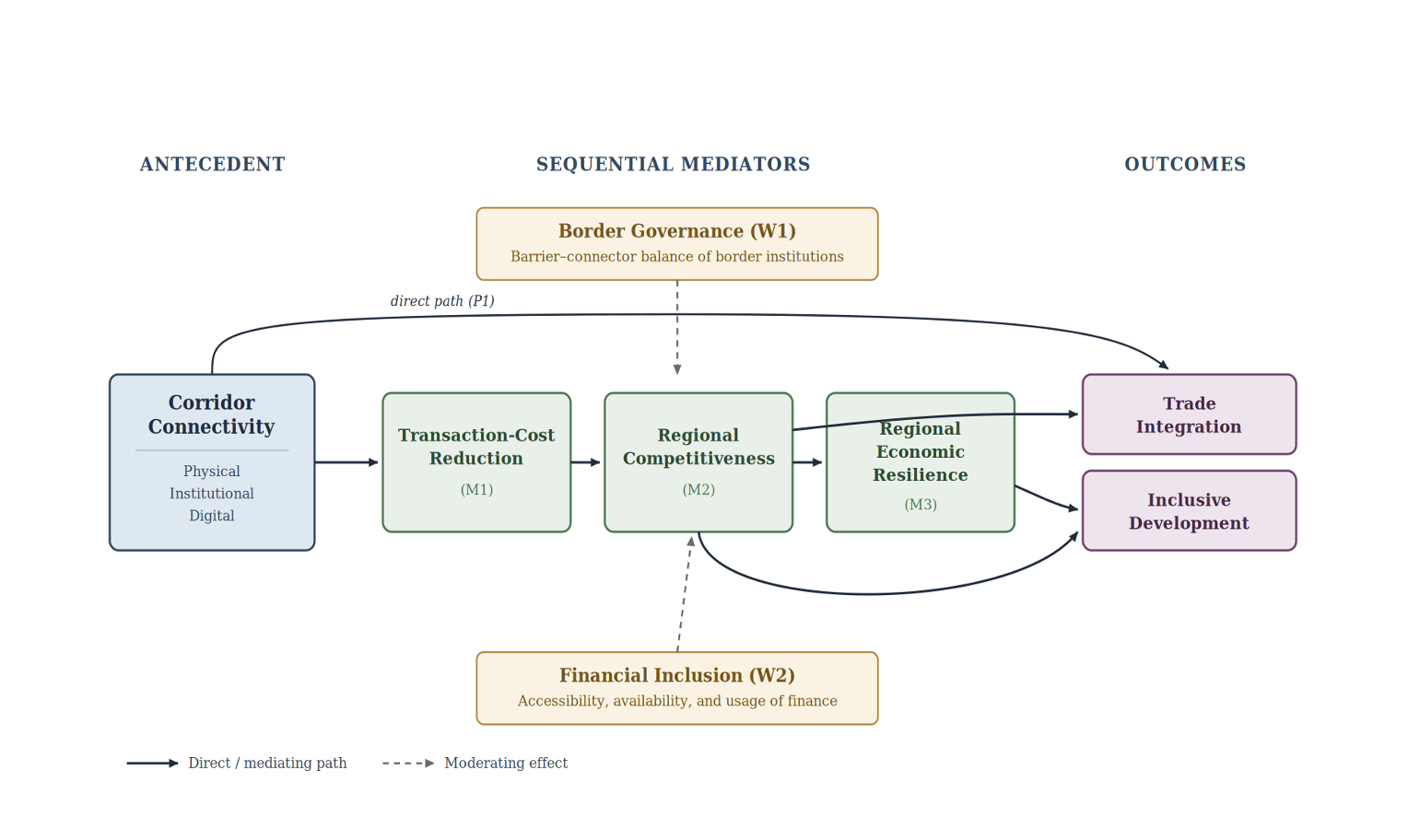
Table 1. Definition and operationalization of constructs
| Construct | Role | Definition | Illustrative indicators |
|---|---|---|---|
| Corridor connectivity | Antecedent | Multidimensional ease of moving goods, capital, and information across the NER–SE Asia interface (physical, institutional, digital). | Road/waterway density; FTA coverage and customs harmonization; cross-border digital-payment penetration. |
| Transaction-cost reduction (M1) | Mediator | Decline in the monetary and time costs of cross-border exchange, including non-tariff barriers and clearance delays. | Logistics-performance index; border-clearance time; NTB incidence. |
| Regional competitiveness (M2) | Mediator | Capacity of the regional economy to produce tradable value through productivity, clusters, and value-chain participation. | Labour productivity; export diversification; firm value-chain linkage. |
| Regional economic resilience (M3) | Mediator | Capacity to withstand, recover from, and reorient after external shocks to the regional growth path. | Output recovery after shocks; sectoral diversity; institutional adaptive capacity. |
| Border governance (W1) | Moderator | Quality and cooperativeness of border institutions determining the barrier–connector balance. | Bilateral facilitation agreements; trust/cooperation indices; informal-trade formalization. |
| Financial inclusion (W2) | Moderator | Accessibility, availability, and usage of formal financial services by enterprises and households. | Index of financial inclusion (accessibility/availability/usage); account ownership; credit access. |
| Trade integration | Outcome | Depth of NER–SE Asia trade and integration into cross-border value chains. | Trade intensity; intra-industry trade; value-chain position. |
| Inclusive development | Outcome | Broad-based gains in incomes, livelihoods, and spatial equity across communities. | Household income growth; livelihood diversification; intra-regional disparity. |
Note: NER = North East Region; SE Asia = South East Asia; FTA = free-trade agreement; NTB = non-tariff barrier.
4. Research Questions and Propositions
The framework is animated by three research questions, which restate the thematic track’s concerns in falsifiable form:
- Through what mechanisms does corridor connectivity affect trade integration and inclusive development in the NER–South East Asia interface?
- Which conditions strengthen or weaken the conversion of connectivity into developmental outcomes?
- How can a single integrated model reconcile the optimism of corridor policy with the observed shallowness of realized integration?
From the theory, six propositions emerge. They are formulated in terms of directionally stated relationships to be tested empirically.
P1. Corridor connectivity is positively related to trade integration between the NER and South East Asia.
P2. The effect of corridor connectivity on trade integration is mediated by transaction cost reduction (M1), which means that connectivity positively influences integration mainly via reduction of the transaction costs involved.
P3. The influence of transaction cost reduction on trade integration is mediated by regional competitiveness (M2): lower costs positively influence integration in the extent to which they contribute to enhancing regional competitiveness.
P4. The influence of connectivity on inclusive development is mediated by regional competitiveness and economic resilience (M2, M3): connectivity increases welfare permanently only via enhancing regional productive capacity and increasing its shock-resistance.
P5. The influence of border governance (W1) modulates the connectivity-trade integration chain: cooperative border management (as connectivity enhancer) positively reinforces connectivity influence on trade integration while securitized and contested borders (as connectivity barrier) weaken this effect.
P6. Financial inclusion (W2) modulates the connectivity-competitiveness chain: connectivity contributes to competitiveness and inclusive development more effectively where financial inclusion is high, and leads to enclave development otherwise.
5. Methodology
This being a conceptual paper, the methodology used is synthesis of theories as opposed to empirical research, while the mode of reasoning used was deductive. This process involved the three steps that were characteristic of the research design activity in this thematic track. Gap identification was the first step, and this involved the process of systematically reading through the literature on trade, spatial economics, institutional theory, competitiveness, resilience, and financial inclusion, and identifying the contextual, theoretical, and integrative gaps as shown in section 2.5. Construct identification was the second step where eight constructs were identified and defined and their relationship characterized as either antecedent, mediators, moderators, and outcomes, as shown in Table 1.
The deductive approach is intentional and consistent with domain alignment that is advised for economics, finance, and management research – theory comes first and observation follows, and the contribution takes the shape of a model with components and propositions that can be measured and falsified, respectively. Thus, the paper focuses on logical consistency, constructs clarity, and falsifiability rather than on the empirical proof, which is delegated to the agenda of Section 9. As for sources, the preference was given to the fundamental statements of theory and peer-reviewed regional literature rather than to secondary literature. Indicators in Table 1 have been selected due to the data availability in relevant datasets.
6. Analytical Elaboration of the Framework
Because the contribution is conceptual, the “findings” take the form of a reasoned elaboration of why each proposition should hold and how it resolves the motivating puzzle.
6.1. Why connectivity alone underperforms (P1–P2)
The predictions of gravity theory imply a positive association between connectivity and integration (P1). But the gravity theory-consistent version indicates that the important variable here is the reduction in transport costs compared to the alternative, and not the number of kilometres of road built (Anderson & van Wincoop, 2003). The presence of an inefficient and securitized border implies a reduction in transport cost without changing the transaction cost, which is the key driver of integration. Therefore, P2 takes into account the mediation of the effect of connectivity through transaction cost reduction. The case of BIMSTEC, in which there has been little trading because of the continuing transaction costs in spite of existing connectivity, confirms exactly the mediation hypothesis (Asian Development Bank, 2022). This theory addresses the first puzzle layer because connectivity, which does not reduce the most significant costs, cannot increase integration.
6.2. Why integration need not raise welfare (P3–P4)
The New Economic Geography, however, alerts us to the risk of furthering core-periphery relationships in response to reduced transportation costs (Krugman, 1991; Fujita et al., 1999). For instance, regions that are well-connected as transport corridors or providers of raw materials may find themselves trading more without increasing their productive capacity. P3 and P4 capture this concept of the New Economic Geography by requiring competitiveness and resilience as preconditions for transitioning from integration to development: there can be no sustained welfare gains from integration without improved productive capacity and its ability to withstand external shocks (Porter, 1990; Martin & Sunley, 2015; Boschma, 2015).
6.3. Why the border and inclusion decide the outcome (P5–P6)
The two moderating variables contain the key conceptual shift contained in the framework. In Proposition 5, the corridor border changes from being a fixed cost to being a governed variable: a given corridor leads to good integration in case of cooperative border management and bad integration in case of securitized border management. This explains why the barrier–connector dual is modeled as a moderator variable and not as a constant (North, 1990; Williamson, 1985). In Proposition 6, the presence of financial inclusion governs distribution: in cases where financial inclusion is high, competitiveness benefits brought about by connectivity accrue to small firms and corridor border communities; in cases where financial inclusion is low, competitiveness benefits accrue to intermediary organizations and corridor leads to enclave development (Sarma & Pais, 2011; Demirgüç-Kunt et al., 2022).
Taken together, the elaboration answers the motivating question through three steps. First, connectivity that does not reduce the binding transaction costs cannot increase integration (M1); second, integration that does not increase and protect productive capacity cannot increase welfare (M2-M3); and third, capacity that does not receive inclusive financing, via a border that is treated as a barrier, cannot lead to shared prosperity (W1-W2). The lack of success seen to date is, from the model's perspective, the predictable outcome of working on the antecedent without strengthening the mediators and moderators. The merit of this framework lies in its ability to make this diagnosis explicit and, using the indicators of Table 1, quantifiable.
7. Discussion
The framework makes three theoretical contributions. The first contribution is that it moves already existing trade and spatial theories away from the nation-state level and into the sub-national, landlocked, post-frontier zone, showing how gravity and NEG are still valid, yet need the concepts of institutions and inclusion added to make them work in the corridor environment. Second, by making the border a moderator in the model, it transforms the common-sense idea that "borders divide and connect" into an empirical hypothesis, and contributes to the institutional revolution in regional economics. Third, by putting competitiveness and resilience as mediators between integration and development, it brings together two separate bodies of literature – competitiveness and resilience.
This framework also changes the understanding of the NER itself. In the dominant discourse on peripherality, remoteness is seen as a characteristic feature of the region. According to this framework, it emerges from the combination of connectivity, cost, and inclusiveness of the financial system, none of which is constant. In other words, peripherality, in this case, becomes something that can be influenced by policies rather than something that policymakers need to work around. This is aligned with the theme of shifting the focus from peripheries to corridors.
8. Implications
8.1. Theoretical implications
In terms of scholarly contribution, the model provides a falsifiable structure that can be empirically validated through mediation and moderation analyses, structural equation modeling or comparative case studies, and it outlines the variables and measures required for testing them (Table 1). The model allows generalization into other sub-national contexts where similar causation through mediators and moderators could occur.
8.2. Policy implications
As policy, the framework produces a diagnostic set of recommendations as opposed to a one-size-fits-all policy. According to the framework, investments in connectivity ought to be considered in relation to the other forms of soft infrastructure that will make the investments worthwhile, including trade facilitation mechanisms aimed at reducing the costs imposed by binding non-tariff barriers, cooperative governance regimes of the borders which will tip the scales in favor of the connectors over the barriers, and programs of financial inclusion which will decide how inclusive the results are.
9. Limitations and Future Research
Whereas the greatest strength of this study lies in the theoretical contributions that it makes, the biggest weakness of this study is the very nature of its strength, namely, that it is purely theoretical in nature, and therefore, not tested. It makes logical deductions but needs to be tested empirically. Furthermore, whereas the indicators used in the paper have been selected for their feasibility, they will need to be carefully crafted against the backdrop of the data situation in which sub-national and cross-border statistics about the NER are incomplete and informal trade is inaccurately recorded.
These are the constraints that set the research agenda. Future research, for one thing, will need to operationalize and quantify the theoretical constructs and estimate the mediating and moderating effects, based on trade, logistics, and financial inclusion data as well as primary surveys of businesses operating at the border crossings. For another thing, a comparative design of contrasting the NER Corridors to other land border corridors in Asia would assess whether the framework is portable and where its moderators apply. Furthermore, mixed methods research could explore the informal economies and social practices that official statistics fail to capture, linking this deductive approach to the inductive and abductive approaches employed elsewhere within the thematic strand.
10. Conclusion
The goal of this paper was to shed light on a dilemma in terms of how continued investments in the corridors connecting North East India to South East Asia have not led to a corresponding trade integration and inclusive development. By deductive reasoning starting from the gravity equation and building on new economic geography, transaction cost institutionalism, competitiveness, resilience and financial inclusion theories, this paper has developed an integrative framework where multidimensional corridor connectivity influences trade integration and inclusive development through cost reduction, competitiveness and resilience via a series of mediators and where border governance and financial inclusion condition the influence of those pathways.
In treating the border as an independent variable and peripherality as a moderated relationship, this paper addresses the challenge posed by the thematic track of going from peripheries to corridors and asking not just “what is going on” but “what does it mean,” for whom, and with what consequence. As the brief points out, great research does more than fill holes in the literature; it creates new corridors of inquiry. This paper hopes to do just that, posing an idea for testing rather than concluding, one through which the corridors of the North East may flourish as corridors of prosperity.
Conflict of Interest
The authors declare that they have no known competing financial interests or personal relationships that could have appeared to influence the work reported in this paper.
Funding Statement
This research received no specific grant from any funding agency in the public, commercial, or not-for-profit sectors.
Acknowledgement
The author would like to thank and acknowledge the contribution of Mrs Bably Thapa for language editing.
Authors’ Contribution
This is the soul work of the author
AI Declaration
No artificial intelligence tools were used in the preparation of this manuscript.
References
Anderson, J. E., & van Wincoop, E. (2003). Gravity with gravitas: A solution to the border puzzle. American Economic Review, 93(1), 170–192. https://doi.org/10.1257/000282803321455214
Asian Development Bank. (2022). BIMSTEC trade facilitation strategic framework 2030.
Boschma, R. (2015). Towards an evolutionary perspective on regional resilience. Regional Studies, 49(5), 733–751. https://doi.org/10.1080/00343404.2014.959481
De, P., & Iyengar, K. (Eds.). (2014). Developing economic corridors in South Asia. Asian Development Bank.
Demirgüç-Kunt, A., Klapper, L., Singer, D., & Ansar, S. (2022). The Global Findex Database 2021: Financial inclusion, digital payments, and resilience in the age of COVID-19. World Bank.
Eaton, J., & Kortum, S. (2002). Technology, geography, and trade. Econometrica, 70(5), 1741–1779. https://doi.org/10.1111/1468-0262.00352
Fujita, M., Krugman, P., & Venables, A. J. (1999). The spatial economy: Cities, regions, and international trade. MIT Press.
Krugman, P. (1991). Increasing returns and economic geography. Journal of Political Economy, 99(3), 483–499. https://doi.org/10.1086/261763
Limão, N., & Venables, A. J. (2001). Infrastructure, geographical disadvantage, transport costs, and trade. The World Bank Economic Review, 15(3), 451–479. https://doi.org/10.1093/wber/15.3.451
Martin, R., & Sunley, P. (2015). On the notion of regional economic resilience: Conceptualization and explanation. Journal of Economic Geography, 15(1), 1–42. https://doi.org/10.1093/jeg/lbu015
Melitz, M. J. (2003). The impact of trade on intra-industry reallocations and aggregate industry productivity. Econometrica, 71(6), 1695–1725. https://doi.org/10.1111/1468-0262.00467
North, D. C. (1990). Institutions, institutional change and economic performance. Cambridge University Press.
Patgiri, R., & Borah Hazarika, O. (2023). Look (Act) East policy and Northeast India: Reimagining the space through institutional, physical and social connectivity. International Studies. Advance online publication. https://doi.org/10.1177/00208817231167994
Porter, M. E. (1990). The competitive advantage of nations. Free Press.
Sarma, M. (2008). Index of financial inclusion (Working Paper No. 215). Indian Council for Research on International Economic Relations.
Sarma, M., & Pais, J. (2011). Financial inclusion and development. Journal of International Development, 23(5), 613–628. https://doi.org/10.1002/jid.1698
Tinbergen, J. (1962). Shaping the world economy: Suggestions for an international economic policy. Twentieth Century Fund.
Williamson, O. E. (1985). The economic institutions of capitalism: Firms, markets, relational contracting. Free Press.
Chettri, N., (2026). Corridors of Competitiveness: A Deductive Conceptual Framework Linking Connectivity Infrastructure to Trade Integration and Inclusive Development in North East India’s Act East Interface,. Bharat Journal of Integrated Knowledge Systems, 1(2), 1–9, https://doi.org/10.67511/bjiks.v1i2.1201
© 2026 The Author(s). Published by Refined-Research & Analytical Support Associated Private Limited. This is a gold open access publication under the terms of the CC BY 4.0 license.